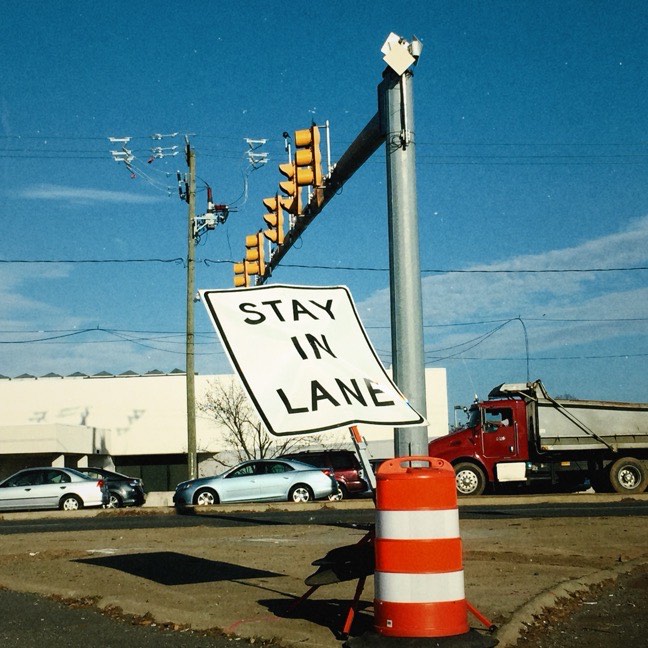
In the late summer of 2015, the stretch of US-29 was a perfect blend of warmth and warning. I was driving north to the airport, the top down, letting that specific Charlottesville breeze—a cocktail of departing heat and incoming autumn—remind me that everything was in transition. On that artery connecting the campus to the world, I passed the same crooked "STAY IN LANE" sign I’d seen hundreds of times. It listed about fifteen degrees to the left, bolted to a post someone had presumably struck and not bothered to straighten. At twenty-one, that sign wasn't just traffic advice; it was a personal affront. Back then, the last thing I wanted to do was stay in my lane.
Rugby Road is where the architecture school sits, wedged between the fraternity houses. On football Saturdays the bass from rooftop speakers carried three blocks. I noticed the freshmen the way you notice a version of yourself you no longer recognize: wide-eyed, moving in loose formations, still operating on the assumption that the institution would supply the direction. I had operated on that assumption once. It cost me a semester and a half.
My father was an architect. The logic of following him into the discipline felt airtight until I was inside it — cutting polyurethane foam, memorizing the taxonomic distinctions between Doric, Ionic, and Corinthian — and discovered that airtight logic can still be the wrong container. I switched to studio art sophomore year, less out of conviction than out of the recognition that I needed a room with more doors. Appropriation video. Photography. Independent design briefs pulled from corners of the internet where no one was grading the outcome. I designed a logo for a DJ who spun records on weekends. I drafted eight billboard concepts for a Coca-Cola open brief that had no prize money attached to it.
Room 313 Johnson Hall: 150 square feet, one window, one desk lamp angled badly. I kept it running past two in the morning most nights. And I certainly wasn’t doing the readings on Chinese-American history, not out of disrespect, but because I was busy digging for gold across the design awards websites. I was, by any conventional institutional metric, underperforming. I understood this. I also understood that the works contained something the grade report did not, and that the only available instrument for measuring it was external competition.
I did not want to win. I needed the information that winning would provide.
There is a meaningful distinction. Wanting a trophy is a transaction — effort exchanged for object. Needing to win is epistemological: you are using the contest as a diagnostic, submitting your private judgment to a jury of strangers because you cannot yet trust your own calibration. At nineteen, operating outside any professional structure, with no mentor and no institutional credibility, competition was the only feedback mechanism available that didn't require someone to do me a favor.
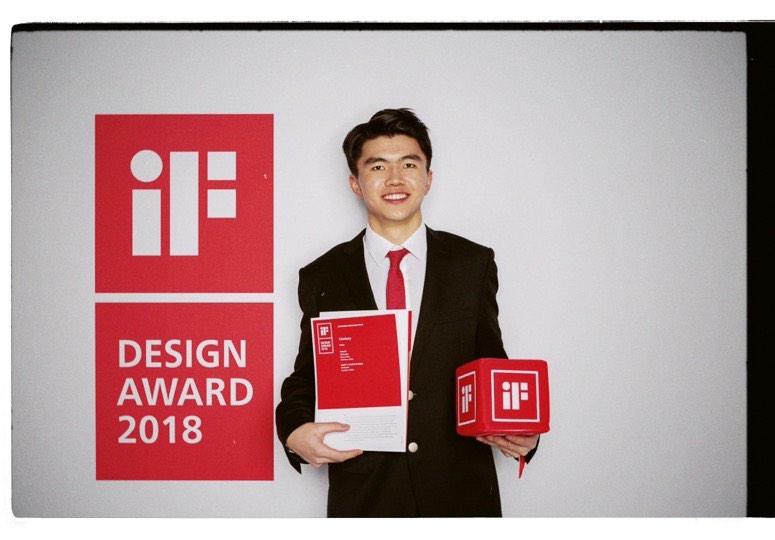
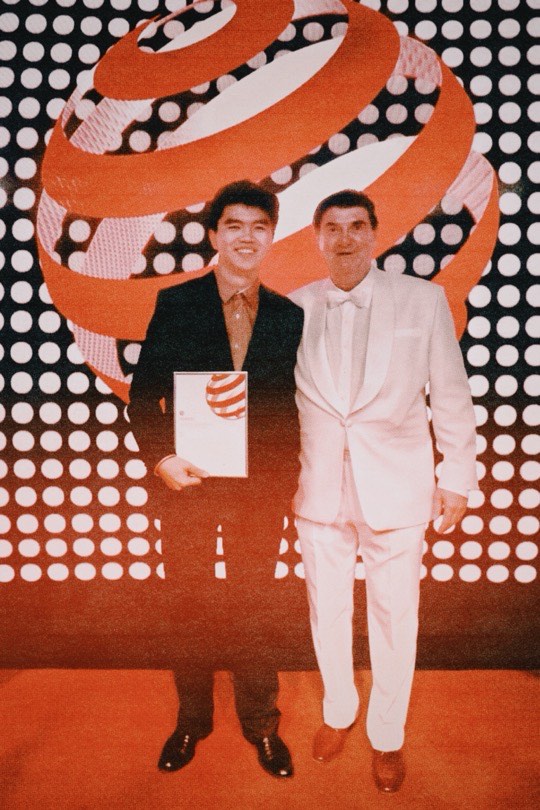
So I studied the machinery. I read the eligibility rules, catalogued past winners, reverse-engineered the presentation logic of successful entries. In 2014, a subway PSA campaign received its first nomination — local, modest, sufficient. By 2017, the inventory had expanded to fifteen awards in a single calendar year, among them the iF Design Award and the Red Dot Design Award, which is the precise kind of sentence that sounds like boasting and is actually just coordinates.
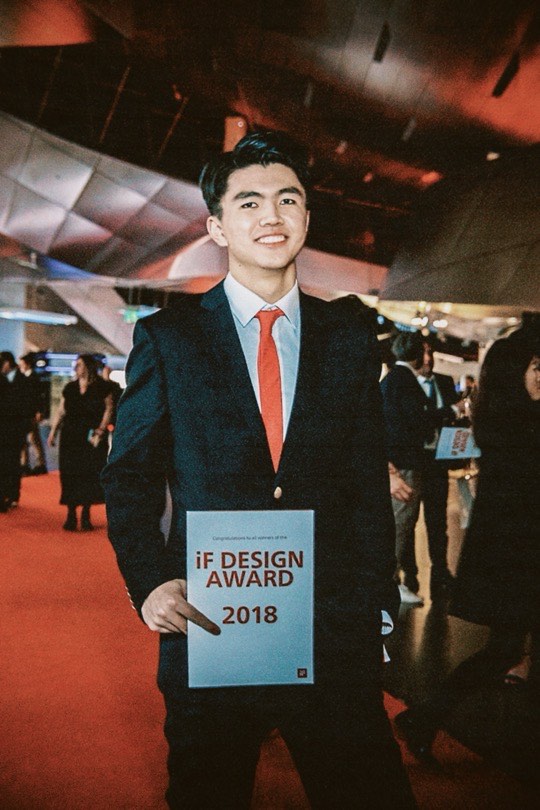
The Red Dot Gala was in Singapore. I flew there in the fall of 2015 from Charlottesville, which required passing that sign one more time going the other direction. The iF Gala was in Munich, March 2018, inside BMW Welt — a building designed to make automobiles feel philosophical. My winning piece was installed in the central exhibition space. Next to it, without irony or arrangement on my part, was a submission from Apple. I was wearing leather shoes borrowed from the DJ whose logo I had designed without payment some years earlier. The economy had balanced itself, quietly, without my noticing the ledger.
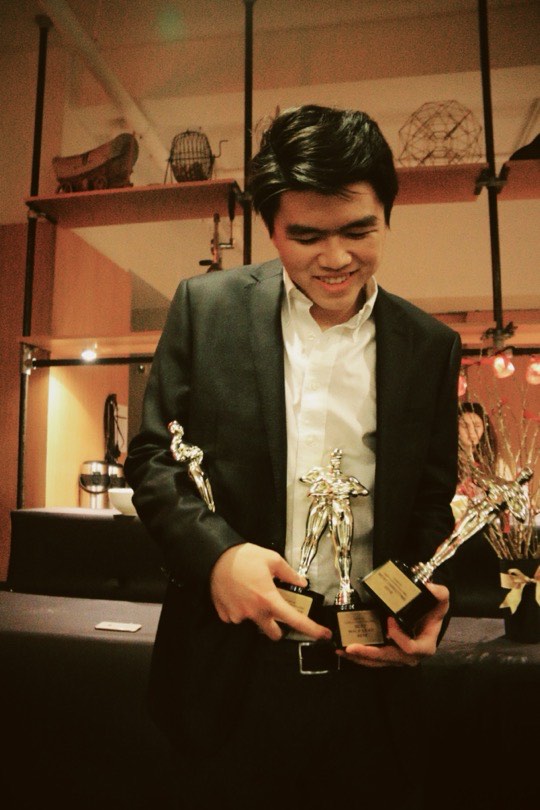
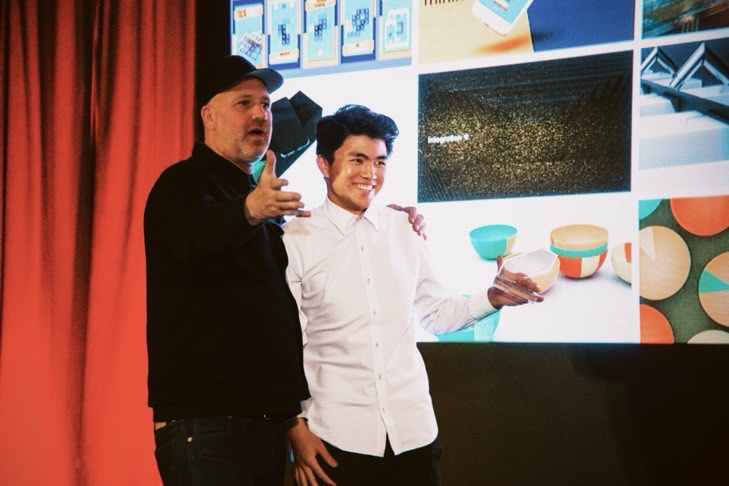
I graduated on schedule, which surprised people who had seen my transcript. Days before the ceremony, I flew to New York for The One Show, where my name was called for the best portfolio award. Standing at that stage, I registered something that had no clean name: not pride exactly, not relief, but the specific sensation of a hypothesis confirmed after a long experiment. The instrument had been reading correctly all along.
Credit is not entirely mine to claim. My parents financed the infrastructure of the whole operation — the prep school, the tuition, the flights — without demanding a particular outcome from it. My mother, specifically, understood the distinction between expensive shoes and expensive education before I had the vocabulary to articulate it. She never said this directly. She didn't have to. The architecture of what they provided said it instead.
The awards occupy a shelf now. On certain afternoons they throw light onto the wall at an angle that seems unearned by the objects themselves — small parallelograms of reflection, migrating slowly as the sun moves. I watch them the way you watch evidence of something you once had to prove.
The crooked sign on US-29 still leans, last I checked. I think it was always pointing somewhere else.
Stay in Lane