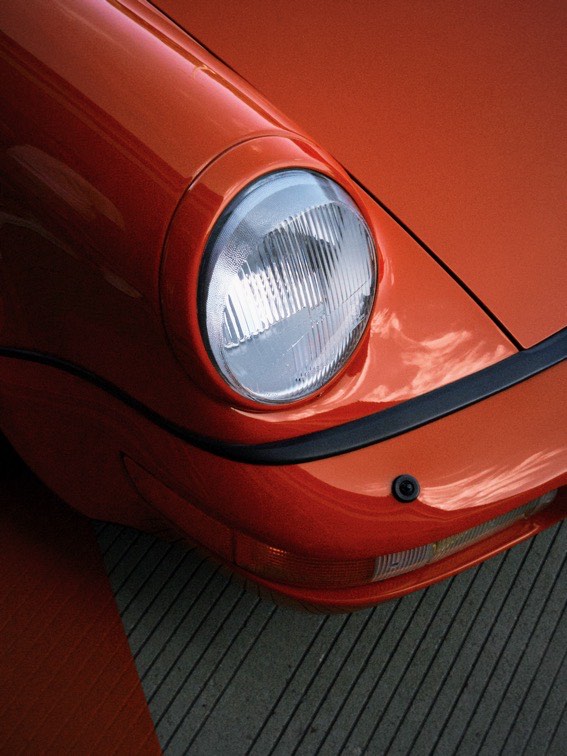
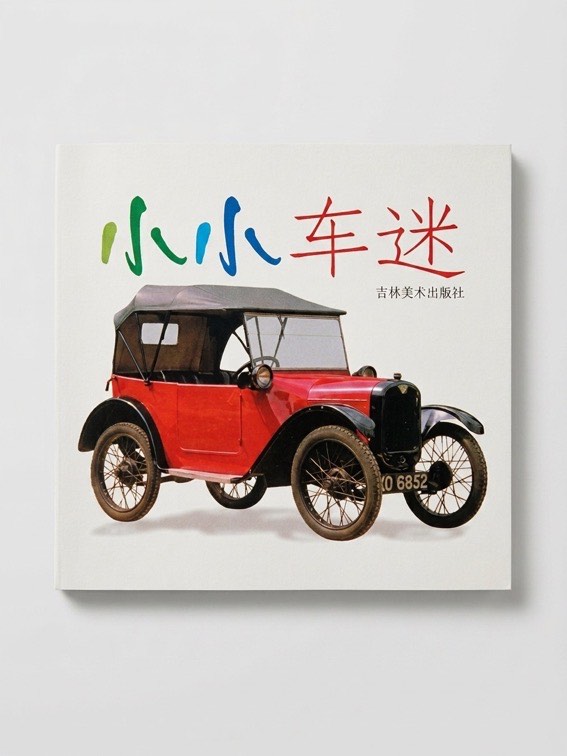
I was the art-class representative, which in the bureaucracy of a Chinese elementary school is roughly equivalent to being appointed Minister of Marginalia. Every textbook I touched suffered the same fate: its blank borders became a production line for side-profile sketches and headlight studies. I drew through math, through language arts, through the patriotic-education modules. My parents, either enabling or oblivious, bought me a car encyclopedia called <Little Car Lover> that I lodged permanently beneath my desk flap, turning pages from Ford Model T to Carrera GT, cover to cover, on repeat. But one marque arrested the loop. I drew those headlights—their precise ellipses, the tension in the hood creases—the way a medieval scribe might copy a prayer he did not yet understand. I could not have named the attraction then. I only knew that certain lines made my hand move faster than my mind.
For the handful of years that constituted my middle school education—roughly the economic equivalent of a geological epoch in early-2000s China—my Yangtze River hometown was developing the kind of manic, unsupervised prosperity that makes historians giddy and urban planners queasy. This was not growth. This was a detonation with zoning permits. Rice paddies became light-industrial parks between one Spring Festival and the next, and the local theory of urban planning was to asphalt first and appoint a mayor later.
We read the economy from the curb. The street was a German trade show masquerading as municipal infrastructure. First came the establishment fleet: the Mercedes-Benz S600, the BMW 760Li, the Audi A8L—long-wheelbase, obsidian, piloted with the entitled languor of men who understood that real power moves at fifteen miles per hour. They drifted through intersections like mobile corner offices, leather-scented and gravity-defying, the automotive equivalent of a properly filed tax return.
Then, without warning, the Porsche arrived. Not as an upgrade. As a correction. A mid-engine rebuke to the entire sedan class, usually spotted outside karaoke parlors, its spoiler cocked like a raised eyebrow. The driver was almost always from Wenzhou, shirt still dusted with the particular metallic grit of whatever he had spent the morning assembling.
Wenzhou is to Chinese capitalism what the Scottish Highlands are to peat smoke: a place that exports a concentrated, high-proof version of the national character. The Wenzhou merchant operates on a principle too blunt to be called economics—more like thermodynamics. He will work the hours you sleep through, at the margin you ignore, in the product category you haven’t yet noticed. Imported wine one year, transformer coils the next, then disposable lighters, then fourth-tier real estate. The inventory changes; the algebra doesn’t. Input relentless effort, compound across one business cycle, and the equation deterministically spits out a Porsche. It isn’t fortune. It is compound interest with a workshop floor.
The first time I surrendered to one was in the back seat of a Cayenne, property of a friend of my father’s. The adults talked business—while I conducted my own audit in silence. The tan interior: fluid, surgical. The exhaust note: a half-register above my father’s Camry, a baritone with a Ph.D. It was early-aughts German engineering, the authentic sort, delivered without irony or apology.
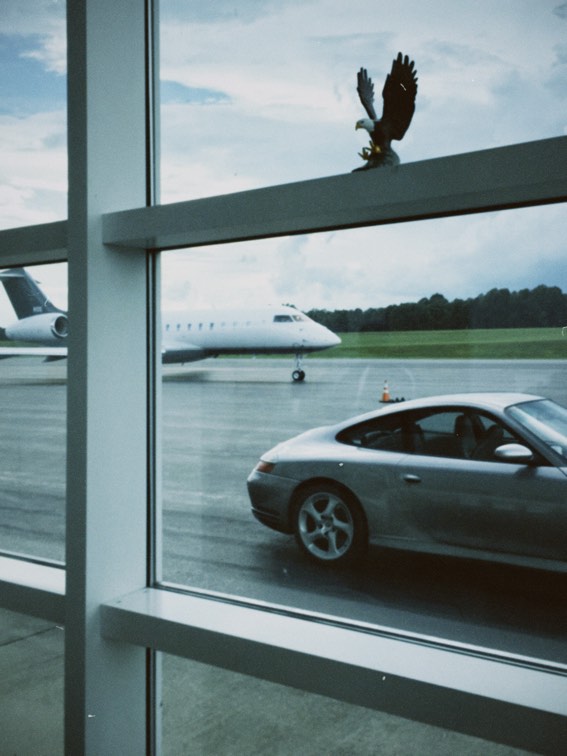
Undergraduate education relocated me to America, where I spent my spare hours learning to fly. The airfield is an excellent classroom for observing the tax bracket above your own; the ramp does not hide its sociology. One afternoon, exhausted beside the runway, I saw a man in a 911 drive through the airport gate and halt exactly two meters from the airstairs of his Bombardier. He emerged with the unhurried efficiency of a man who has never once been late because the world reorients itself around his schedule. He adjusted his sunglasses, tossed his coat to an assistant descending from a trailing Suburban, and boarded. Then the ground crew drove the Porsche over and parked it—two meters from where I sat, separated only by glass. I felt something strange and certain, as if the machine had been bequeathed to me, as if I were already dreaming it. The jet taxied and lifted off. For him, a forgettable Tuesday. For me, a revelation compressed into the length of a pop song: a man who commands a twenty-seat Bombardier still elects to arrive at it in a two-seat Porsche. That isn’t transportation. That is a confession of preference.
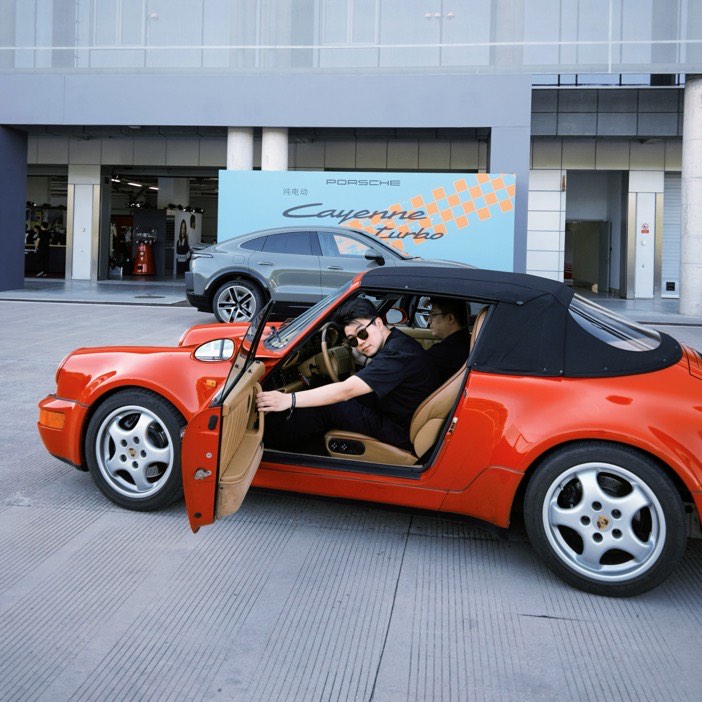
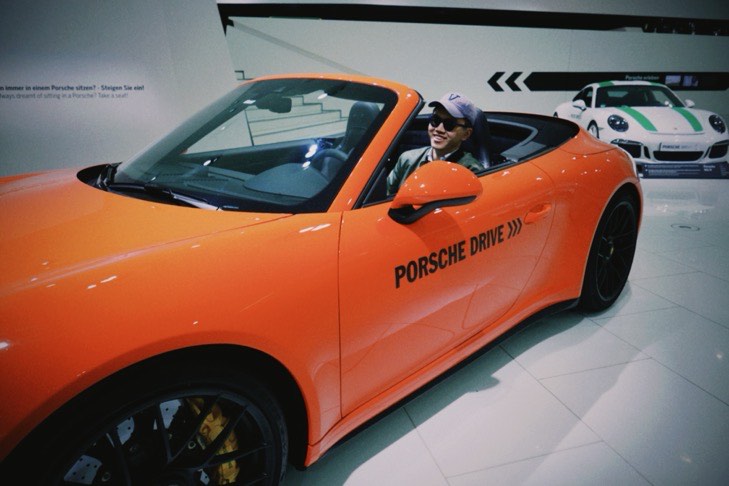
Graduate school brought my first iF Award. I crossed the Atlantic to collect it in Munich, then carved out half a day for Stuttgart. As a young designer still mapping his own coordinates, I wanted to stand inside the index of that history—the philosophy embedded in the sheet metal. The Porsche Museum is not a warehouse of nostalgia; it is a filing system for industrial aggression. What you feel there is not the cathedral grandeur of Mercedes or the operatic flamboyance of Ferrari. It is something rarer: ferocity held under such deliberate pressure that it becomes a different emotion entirely. Restrained and violent simultaneously. Forgive me—I still cannot translate it fully into language. Eight years later, it remains the magnetic north of design I most trust. Before leaving, I climbed into a convertible 911 on the showroom floor and asked a friend to shoot me. “Find an angle,” I said, “where it doesn’t look like we’re in a museum.”
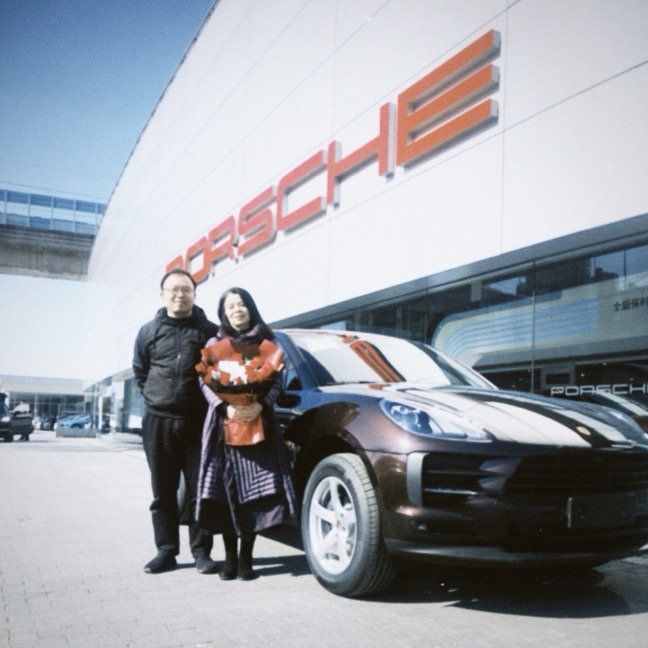
The first Porsche in the family was not mine. My mother bought a Macan. She claimed it was immediate visual certainty—the simplest, cleanest proposal in the parking lot. A friend had lobbied hard for a Range Rover; thank God she possesses an immunity to bad advice. Every time I came home, I commandeered it. That full row of center-console buttons felt tactile and correct, like the controls of a vintage synthesizer. I was finally driving one.
I returned to China. It was time to purchase a new car for myself, and I only test-drove one brand. Of course. The world had declared its pivot to electric. It was the year the Taycan launched. I test-drove a GTS and was arrested by the extreme minimalism of the interior—a subtractive design logic that suggested confidence rather than cost-cutting. The salesperson delivered a twenty-minute aria on regenerative braking and voltage architecture; I retained almost none of it. Then I pressed the accelerator, and for the first time I experienced the cliché made literal: man and machine as one. Five minutes circling the dealership lot. The decision took five seconds.
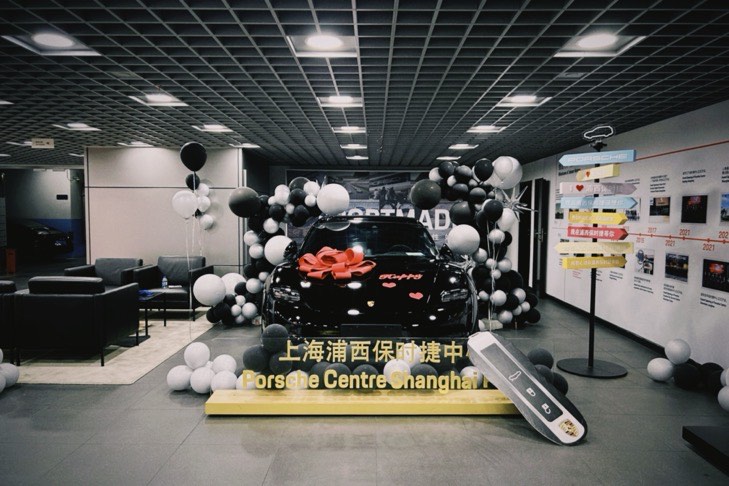
Two years later, Shanghai, midnight. I watched the Taycan Cross Turismo launch online. Before the stream ended, I had already decoded the formula: an EV, a shooting brake, a light off-roader, a sports car, and—because the brand refuses taxonomy—a Porsche. I entered a period of private obsession with the online configurator, logging what must have been hundreds of sessions on porsche.com, moving through every available catalog item until I knew the matrix by rote—seatbelt stitching, wheel spoke geometry, the exact variance between matte and gloss carbon. I was constructing the ideal object under the hard constraint of fiscal physics, rehearsing desire without breaking the bank. The order was finally placed at the Puxi dealership.
Then came the vigil—semiconductor shortages, lost option packages, delays measured in geological time. For roughly six months I tracked the car across two continents: assembly-line photographs from Zuffenhausen, then the loading dock, then the container ship threading through the Suez, its coordinates pinged on a maritime app I had downloaded solely to watch this cargo cross the ocean and clear customs. I had seen the Cross Turismo a thousand times already—on launch stages, airport billboards, configurator renderings, factory updates emailed at each production milestone, and in the final photograph the sales rep sent from the parking garage two days before delivery—yet none of those iterations prepared me for the garage itself.
It was simply parked there, under fluorescent light, every proportion exactly as specified, every surface already memorized. I had rehearsed this encounter until it felt like a medical certainty; still, walking toward it was like meeting an infant whose face you have studied in ultrasounds: technically familiar, biologically inevitable, and yet—the moment breath enters the room—strange and absolute. I skipped the ceremonial handover, took two casual photos, and eased out of the parking garage with the exaggerated care of a man handling unstable ordnance.
This was the first ever Taycan Cross Turismo the dealership delivered.
Later, I put on a Drake playlist at midnight and drove a full clockwise loop of Shanghai’s Inner Ring. Every time “Do Not Disturb” came on, I felt the specific, focused regret of having failed to check the box for Burmester. At red lights, pedestrians halted mid-crossing to glance back—adults and children, pointing at the badge, debating what species it was. Shanghai has catalogued every bespoke supercar and stretched limousine. But restraint, precise and unhurried, is immune to habituation. The car does not shout. It simply refuses to be ignored.
Slowly, the odometer crossed twenty thousand. I do not waste it on city commuting; the vast majority of those kilometers were conjured on the G2 Expressway. Two years, from being laid off to starting my own business, a road simultaneously familiar and structurally alien. Every press of the accelerator mapped to a decision made while becoming a better self. Every intersection—a turn, a U-turn, a surge of speed, a brake. Every exit taken, and every exit missed. I understand myself better than I did at the start. I am not more comfortable now. I am easier. There is a difference. Comfort is a padded seat; ease is a cleared debt.
I will never buy massage seats, a panoramic touchscreen, or surfaces that beg to be touched. I will never follow a trend. The world accelerates toward noise; my response is to move inward, toward what actually matters. Restraint, in an age of excess, is the last radical act.
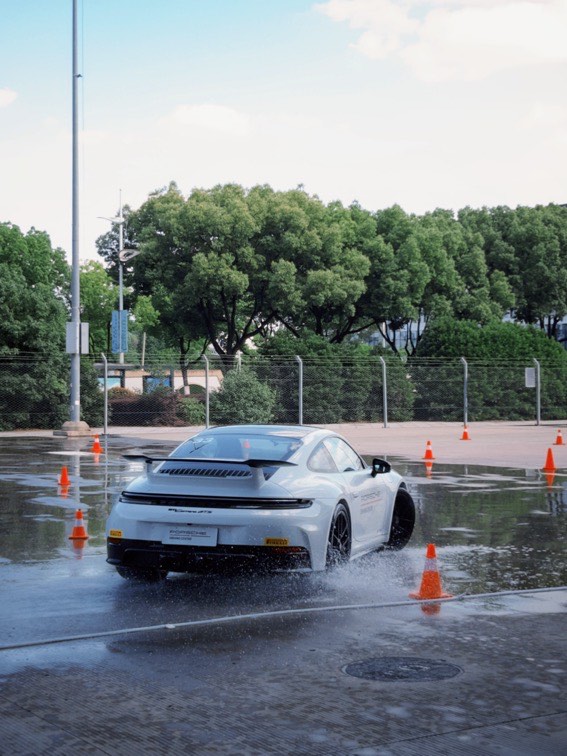
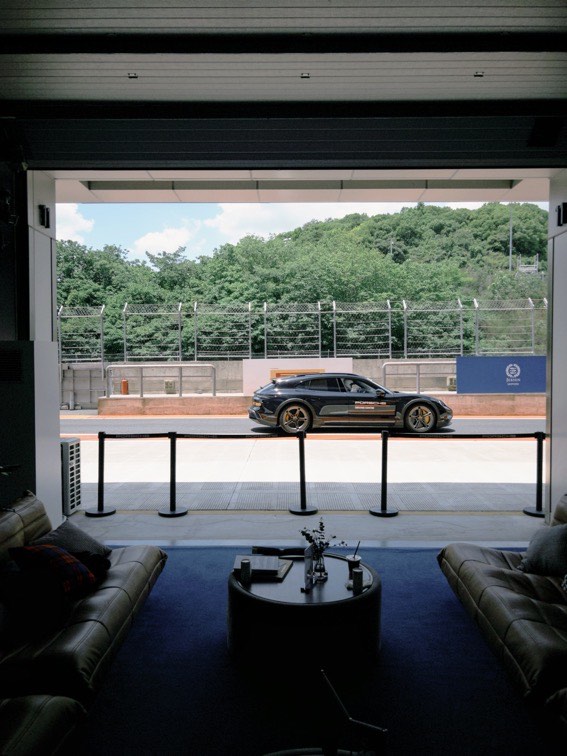
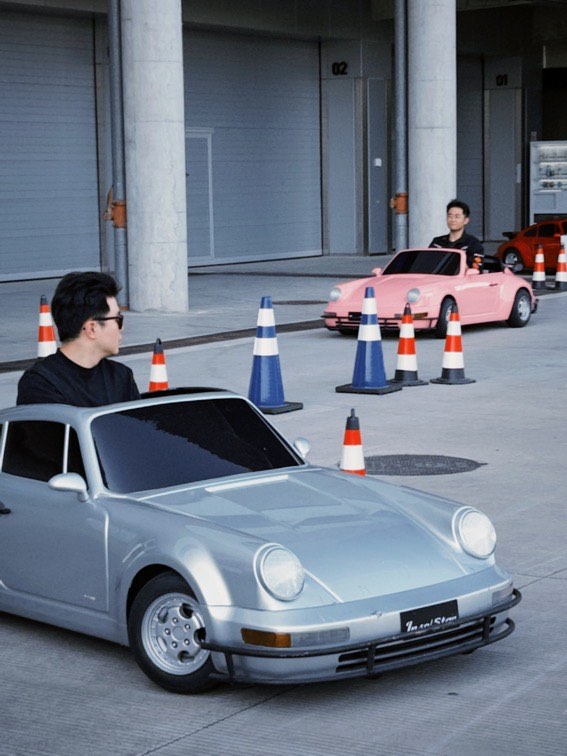
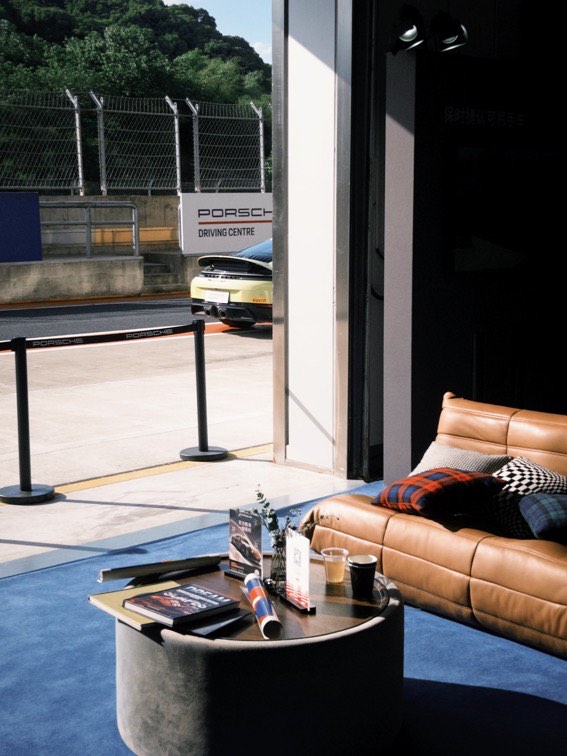
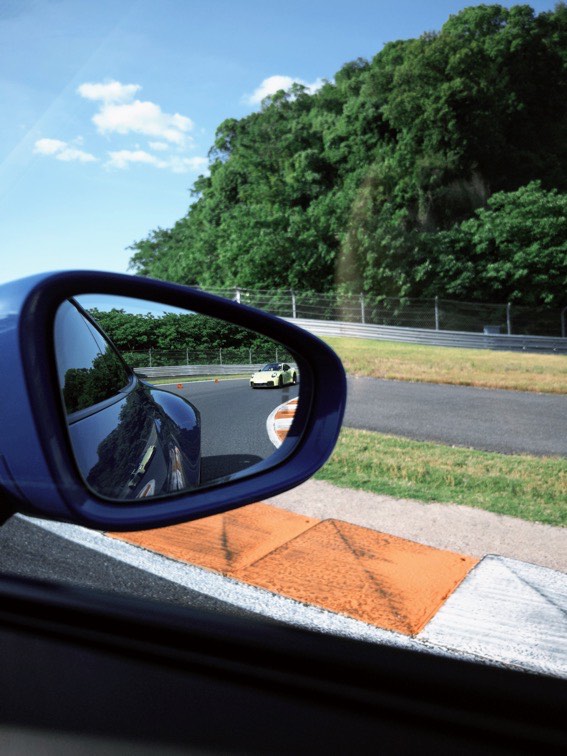
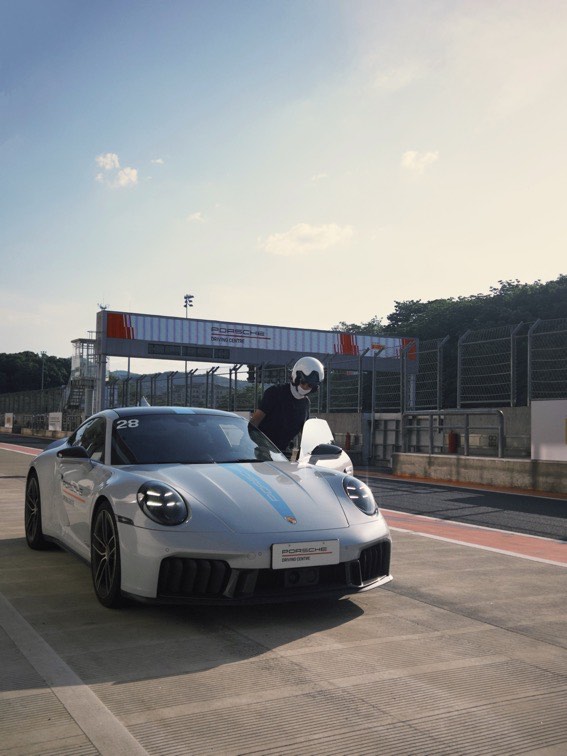
Today, a childhood friend—he took delivery the same day I did—and I drove to Zhejiang International Circuit. First track day for both of us, arranged through Porsche. The curriculum runs from GT3 to 914, and the syllabus is the same: the track is not a driving style. It is self-knowledge.
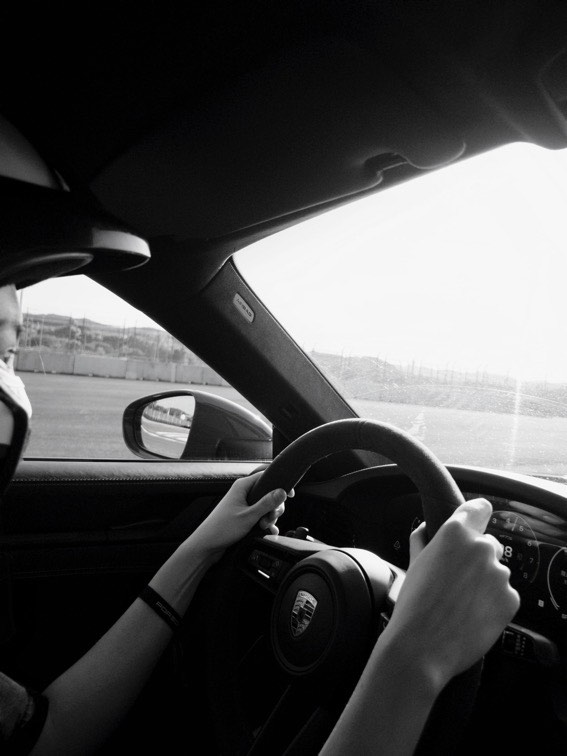
I strapped into the GT3 and fired the flat-six. The cold-start note is not volume; it is sharpness—the sound metal makes just before it shears. Warm-up lap: tires still recalcitrant, the steering wheel arguing with every tarmac seam, transmitting the quarrel through carbon fiber directly into my palms. The instructor kept saying: look further, look to the apex. I forced my eyes away from the hood. My body resisted. The brain said too fast. The right foot kept going.
First hard braking point: ABS kicked back against my sole, the harness drove into my sternum, half my air departed in one shot. The real braking zone, it turns out, begins ten meters after instinct insists you must already be stopped. Those ten meters are the margin between fear and fact.
Drift section. The rear loses grip, the tail swings, you counter-steer—but how much? You have roughly three-tenths of a second to file your thesis. Too much: spin. Too little: plow. The loss of control is not catastrophe. It is data. The car announces: here is the edge. This is where you live or you don’t. For the first time I understood what man and machine as one actually means—not romance, but trust under fire. Trust in weight distribution, in tire limits, in what your hands decide in under a second while your mind is still processing fear.
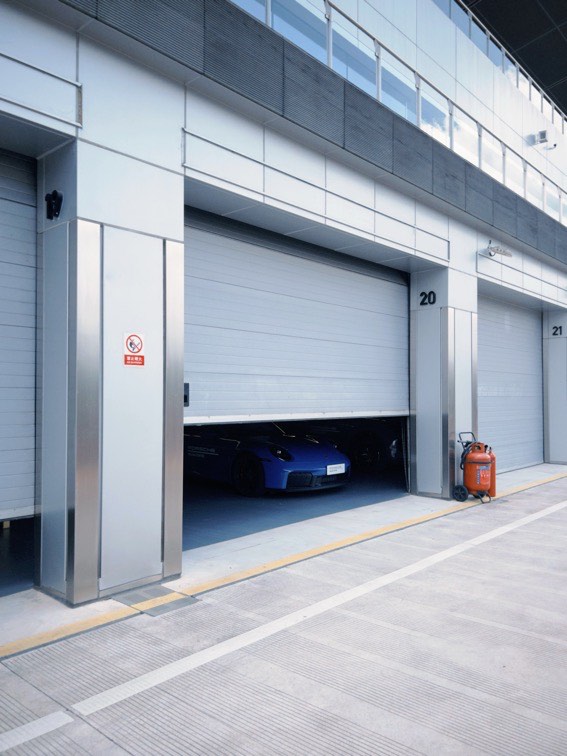
Racing was fun, and we were entirely exhausted— walking back to my car at the garage at the end of the day.
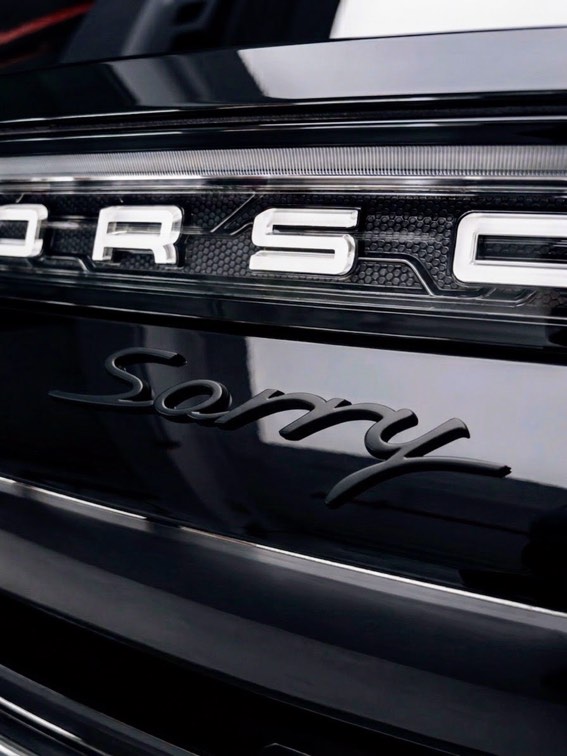
Shortly after I took delivery of my own car, I designed a decal in Porsche’s typeface. One word: Sorry. I stuck it on the rear.
For years I have been apologizing. Sorry for the opportunities I hesitated past. Sorry for the decisions my perfectionism postponed. Sorry for thinking so elaborately and moving so little. I believe I possess some talent. But talent imprisoned by perfectionism is merely a very ornate cage. Porsche is also a brand that chases perfection—but it knows how to find balance inside that pursuit. Restrained lines. Exactly the right amount of force. Not one gram more. Not one gram less.
That Sorry badge is a daily reminder: some apologies still need to be said. But the most important thing in life is to go all in, fully present, with everything you have. Everything else can only be left behind.
Sorry